 Download Brochure
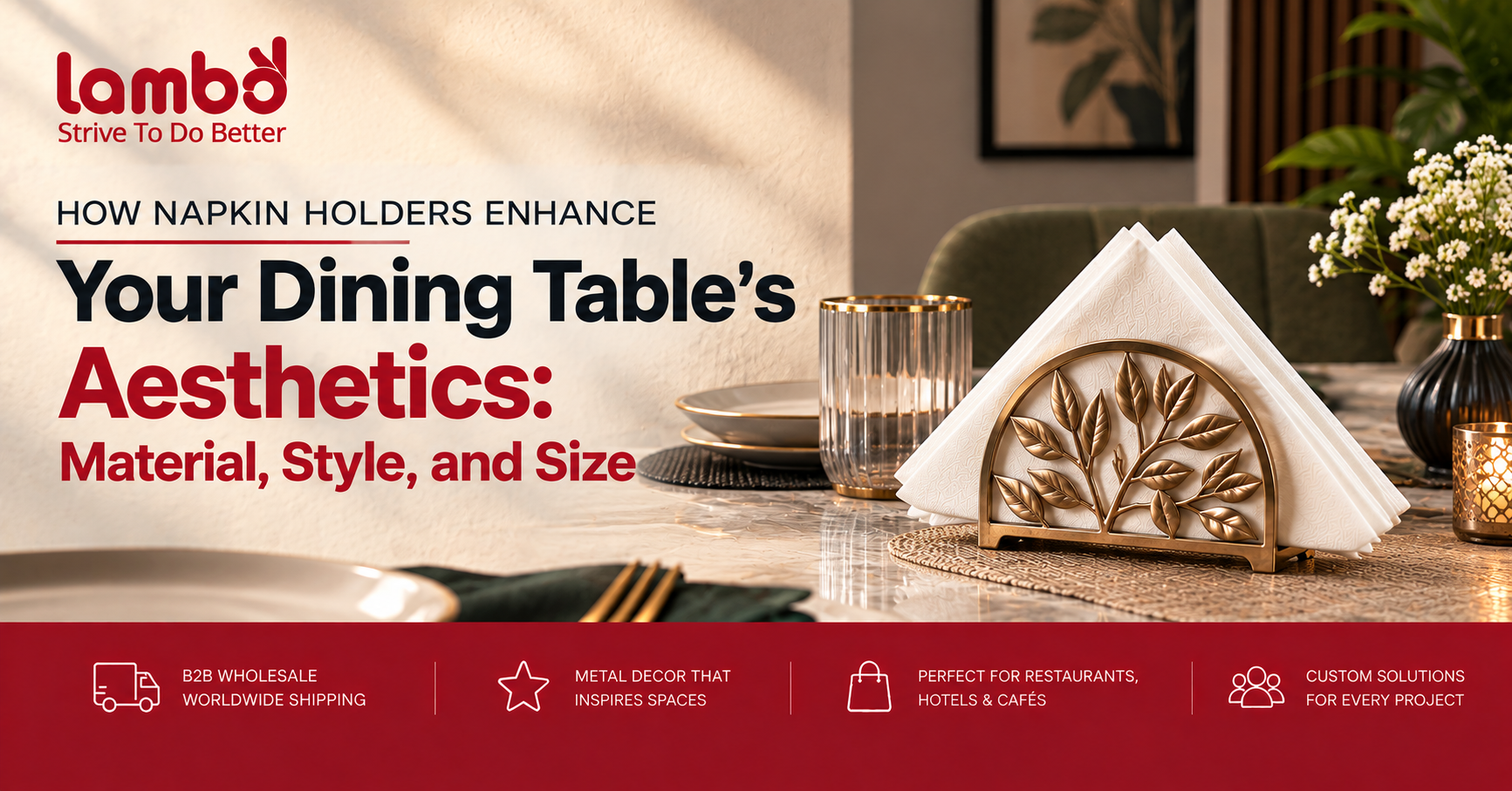
 How Napkin Holders Enhance Your Dining Table’s Aesthetics: Material, Style, and Size
There is a version of this story that plays out in almost every home. You spend real time on the tablecloth, the plates, the glasses, and the cutlery. You arrange everything carefully. Then you put a cracked plastic holder or a warped wooden piece right in the center of the table and undo half of what you just did.
The truth is, decorative napkin holders have moved well past utility. They sit at the center of the table, within arm’s reach of every guest, and they are handled more than almost anything else on the surface. What you choose there says as much about your attention to detail as the crockery you spent three times as much on.
This guide covers the three decisions that actually matter: material, style, and size. Whether you are setting a home dining table or sourcing a napkin holder for dining table use across a full restaurant floor, the logic is the same — the right choice holds up, looks right, and does not need replacing every year.
Material is the decision most people make last — they find a design they like and then check what it is made from. That is the wrong order. The material determines how long the piece lasts, how much maintenance it demands, and whether it can survive the conditions it will actually live in.
A metal napkin holder is the most practical choice for daily use — full stop. Wipe-clean and moisture-resistant when powder-coated, and sturdy enough to be moved, knocked, and handled several times a day without showing it. Iron holders with an anti-rust coating do not chip or scratch under normal dining conditions. They do not absorb spills. They require no maintenance beyond wiping down. For a piece that lives on a table and gets touched at every meal, that is exactly the brief.
A wrought iron napkin holder adds an extra quality—the weight and hand-finished texture of the material reads as considered rather than mass-produced. This is why wrought iron has become a consistent choice in restaurants and cafés as much as in home dining rooms.
A wooden dining table napkin holder looks warm and natural in a lifestyle photograph. In daily use on a family dining table—near spills, steam from hot dishes, and regular wiping — wood absorbs moisture, swells,, and shows wear at the edges faster than metal. Fine for careful conditions. Not ideal for anything that sees consistent use.
A brass napkin holder brings a warm vintage tone that suits formal dining rooms and fine dining restaurants. The limitation is maintenance — brass tarnishes with handling and needs periodic polishing. For a piece that is wiped and moved daily, that is worth knowing before committing.
Inexpensive and easy to clean — but they read as temporary from the moment they are placed on the table. A table tissue holder in plastic or acrylic on a carefully set dining table creates a visual disconnect that is hard to unsee once you notice it.
A decorative napkin holder should complement the table’s character — not compete with it. The question is not which one looks best on its own. It is which one belongs here.
Open-frame geometric designs in matte black or chrome suit modern dining rooms where clean lines define the furniture and layout. A steel napkin holder with a simple upright frame does the job without interrupting the table’s visual calm. It holds the napkins, it is easy to reach, and it does not ask to be noticed.
Ornate cut-out patterns—butterfly motifs, floral outlines, and decorative scrollwork—suit formal dining rooms and traditional settings. These are the pieces guests notice and comment on because they feel intentional rather than functional. The LamboArts butterfly napkin holder iron design falls squarely here—consistently praised for the quality of its ironwork detail and its dual-size value when ordered as a set.
A restaurant-style napkin holder is a different brief. It needs to be easy to refill during a busy service, stable enough to stay put when the table is cleared at pace, and consistent in appearance across every table in the room. Themed designs — cutlery motifs for dining rooms, coffee cup patterns for cafés, cocktail glass designs for bars — give the space an identity that a plain holder cannot. This is where bulk ordering becomes important: every piece needs to look the same, and only a metal holder in a powder-coat finish delivers that consistency reliably at volume.
Size is the practical decision most guides skip over. A napkin holder set of 2—one for the dining table and one for the coffee table or side table—is worth thinking about from the start, rather than buying two separate pieces later and hoping the finishes match.
For the dining table, the proportion of the table surface matters more than the proportion of the napkin. A narrow upright holder on a large eight-seater dining table looks undersized. A wide caddy-style holder on a small café table dominates the surface. The general rule — the holder should occupy no more than one-sixth of the table’s width when viewed from above — is a reliable starting point.
For napkin type, the slot matters. A napkin holder is typically narrower with tighter slot tension that keeps paper napkins upright and fans them correctly. A cloth napkin holder needs a wider, open-frame design that allows a folded cloth napkin to be drawn out cleanly without pulling the stack. Buying the wrong slot width for your napkin type is the most common size mistake — and it shows every time a guest reaches for one.
For a napkin holder for restaurant bulk orders, compact footprint matters as much as capacity. A restaurant table is a working surface. The holder sits alongside cruets, candles,, and condiments—it cannot dominate the layout. Choose designs with a smaller base footprint and adequate capacity for a full service without mid-meal restocking.
The finish on your holder should speak to the finish on your cutlery. This sounds obvious, but most people choose the two at different times and never put them side by side before buying.
Matte black holder with dark-handled cutlery — cohesive, modern, considered. A matte black holder with bright silver cutlery — contrast that works if deliberate, but reads as a mismatch if not. A warm brass napkin holder on a white-set table with warm-toned cutlery creates an elegant focal point without effort. The same piece next to cold chrome cutlery creates visual noise.
One approach that always works: use contrast intentionally rather than accidentally. If everything else on the table is silver and cool-toned, a single warm metal holder reads as a deliberate accent. If you did not plan it that way, it reads as an oversight.
The seasonal angle is worth noting. The holder stays year-round. The dining table accessories around it—napkins, runners, and candles—change with the seasons. A quality metal holder in a neutral finish works across every seasonal shift without being swapped out.
The dining table is the obvious placement. It is not the only one. A napkin holder for kitchen countertop use is practical and often overlooked—a steel holder near the prep area keeps paper napkins accessible without cluttering the counter, and a metal finish wipes clean faster than wood around a cooking environment.
Breakfast nooks and coffee tables work well with a smaller tabletop napkin holder—matching the design language of the dining table holder keeps the home feeling considered rather than assembled piece by piece.
For commercial settings—restaurants, hotel dining rooms, and café counters—the napkin holder is a quiet brand signal. The same elegant dining table accessories logic applies at scale: every table in a restaurant should carry the same holder in the same condition. Powder-coated metal is the only material that delivers that consistently across a full floor of tables through a year of daily service.
Metal — specifically powder-coated iron or stainless steel. A rust-resistant napkin holder in iron or steel construction does not warp with moisture, crack under handling or fade under UV the way wood and acrylic alternatives do over time. For daily use, metal is the only material that requires no maintenance beyond wiping.
Match the holder’s scale to the table, not the napkin. A standard upright holder suits most mid-size dining tables. If you are buying for multiple surfaces — dining table and coffee table — a napkin holder set of 2 in a matching finish and different sizes is the cleanest approach.
Yes — but choose an open-frame or wide-slot design. Standard upright dispensers with tight slot tension are built for paper napkins. A wider-frame napkin stand holder with a generous opening accommodates folded cloth napkins cleanly without pulling the whole stack when one is removed.
Match the holder finish to the dominant metal tone in your cutlery. Use contrast deliberately — a warm brass napkin holder on a white table creates a focal point with minimal effort. An accidental mismatch between a holder and cutlery reads differently. Put both side by side before you commit.
Yes — powder-coated or treated iron is the best choice for both. A metal napkin holder for dining table use in restaurants is preferred because the finish is wipe-clean, rust-resistant, and maintains its appearance through repeated daily handling, which wood and acrylic cannot reliably deliver at commercial volume.
The piece that sits in the center of the table and gets reached for at every meal deserves the same consideration as the plates around it. Choose material first—metal for durability, wipe-clean practicality, and a finish that does not ask for maintenance. Style second—match it to the table’s existing character, not to what looks good on a product page in isolation. Size third—proportion it to the table surface and match the slot width to the napkin type you actually use.
A quality decorative napkin holder on a well-set table is the detail guests notice without knowing why the table feels more considered than the last one they sat at. That is exactly what good table styling does—it disappears into the setting and leaves an impression without drawing attention to itself.
LamboArts’ metal napkin holders are available across 13 designs—from ornate ironwork butterfly designs to clean minimal frames—all powder-coated and built for daily use at home and in commercial settings.
Phone: +1 833 655 2626
Email: mkt.usa@lamboarts.com
Address: Houston - Texas, USA
Phone: +91 81550 11461
Email: mkt.in@lamboarts.com
Address: Ahmedabad, India